July 10, 2026
Architecture for the Wound
Casa de Luz: relief, dignity, and care on the U.S.–Mexico border
They call this place the corner of Latin America.
The fence forces itself on the land through spikes, cement, and barbed wire, cutting through sand and sea, piercing westwards into the canyons with that reddish bronze color as far as the eye can see. La línea (the line, as locals call it) skirts this dizzying landscape, bending and twisting as it escorts the gaze across the topography of the creeks. A river, now dry, cuts through the roads beneath our feet, forcing the city to raise its traffic and tilt its urbanization. And so, the largest city in Baja California rises, imposing; one elevated motorway at a time, one DIY concrete slab at a time, one yawn (or kick) at the fence at a time.
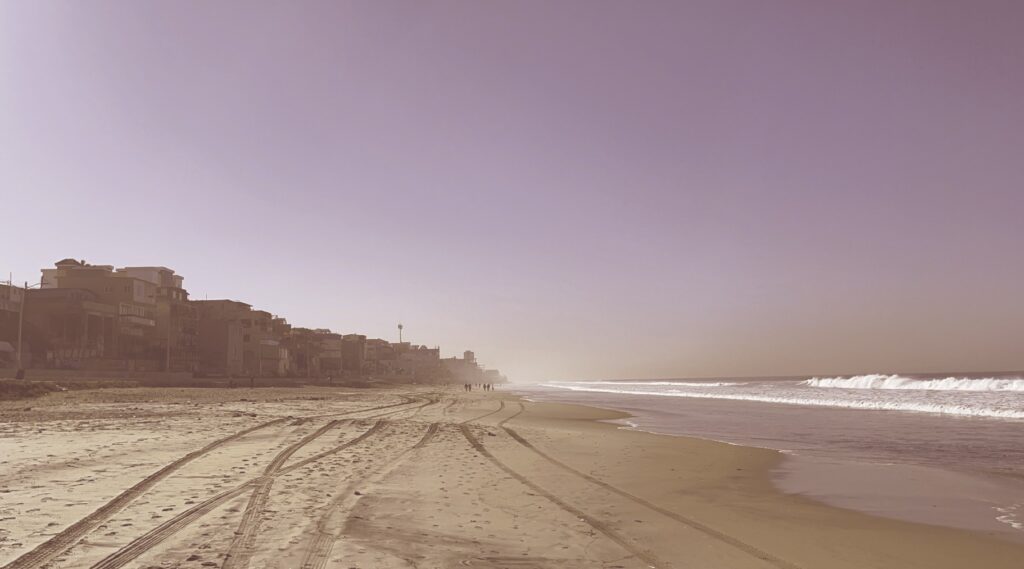
I am in Tijuana, the westernmost city in Mexico, right on the border with the United States. As I walk in Playas, a relatively new neighborhood which faces the Pacific coast, news of the latest of brutalities in the country next door, committed by ICE (the US Immigration and Customs Enforcement task force), echoes in my head. While this violence is not new – surveillance, intimidation, and control are an important part of what border communities have been dealing with for decades – it is intensifying: the situation migrants are faced with in the US has only worsened since Trump’s 2025 executive orders, illustrating a global trend of fascism on the rise.
Yet, talking about the border solely in those terms feels… incomplete.
Language matters
Gloria Anzaldúa wrote that a border is “a vague and undefined place created by the emotional residue of an unnatural boundary.”1 Those who inhabit it, she argued, are the “forbidden and the banned: los atravesados”2. Atravesado in Spanish means ‘crossed, pierced’, it is a fleshy, physical word, suggesting a wounded state – a notion Anzaldúa uses repeatedly to refer to the US-Mexico border as “an open wound of 2,500 km.”3
Anzaldúa’s conception of the border offers a painful narrative that, while true, is also sensitive: it can hide the complexity of the region and the human stories that inhabit it, reducing the experience of borderlands to one of just anxiety and aching. However, on a section of ‘The Wall’ near Tecate, a neighboring border town close to Tijuana, a piece of graffiti reads, “También de este lado hay sueños” (There are dreams on this side too) – a poignant invitation to tell this story differently.
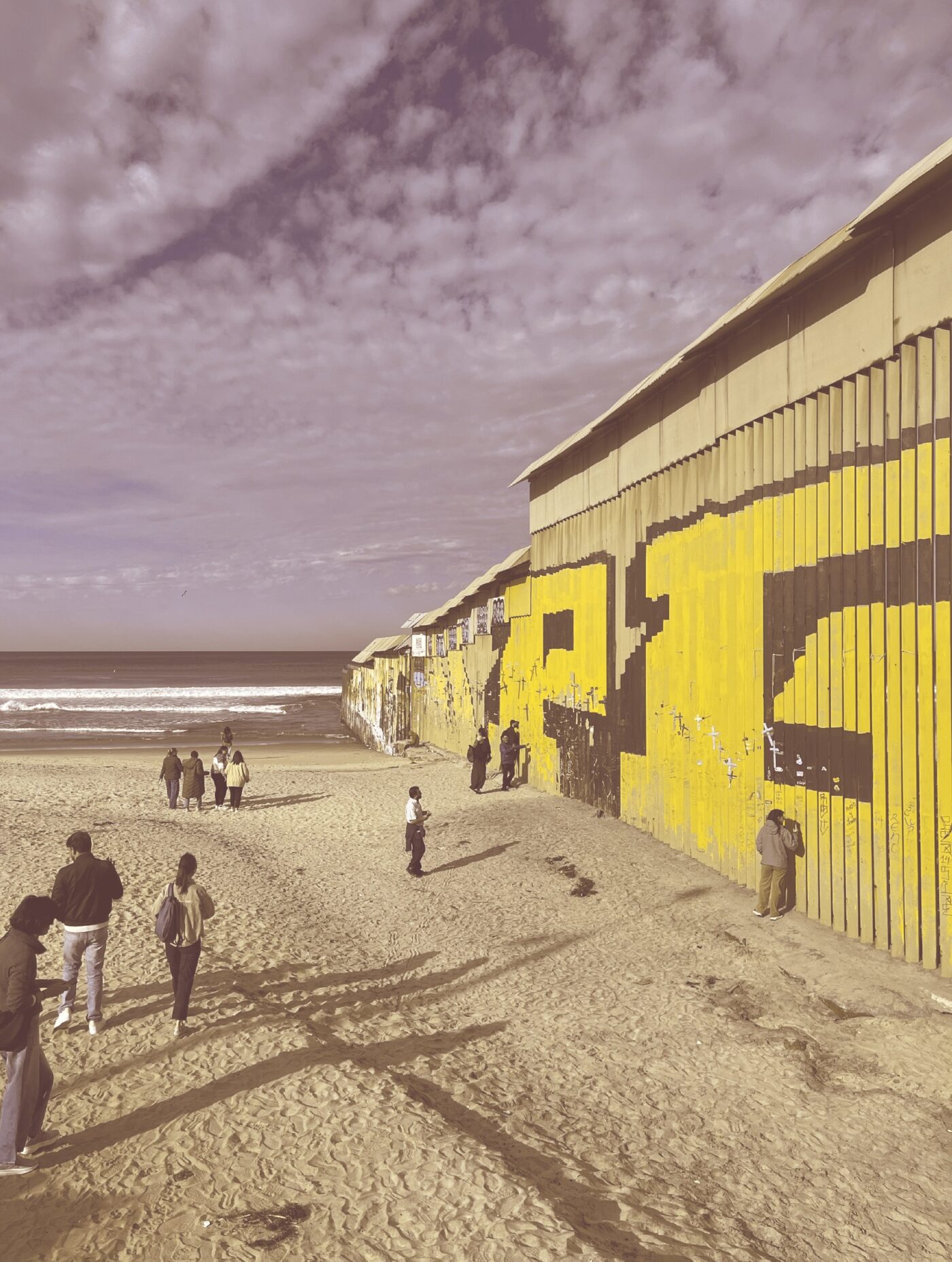
Walking northwards on the beach in Playas, eventually one hits the fence. The sea (which, shockingly, is exactly the same on both sides) crashes into this alien, paranoid structure, splitting the land. Both sides are dramatically different: the Mexican one is covered in eye-catching, colorful art, people practicing sports, and those selling food and souvenirs a few meters from it. On the US side, instead, is a cold militarized area, filled with shreds of barbed wire across the sand, its color darkened by the shadows of the fence’s spikes. There’s not a single soul to be seen; a lonely Border Patrol car sits on top of the dunes.
The sight of this lively, contradictory border triggers something in me. What can architecture do, for that wound Anzaldúa was describing? What if we didn’t talk about the architecture of the wound – the fence, for instance – but for the wound? What if we focused, instead, on forms of architecture for relief, dignity, and care in the borderlands?
A collective house
Roughly a 30-minute walk along the beach, southwards from the fence and facing the lively Parque Azteca Sur, is Casa de Luz.
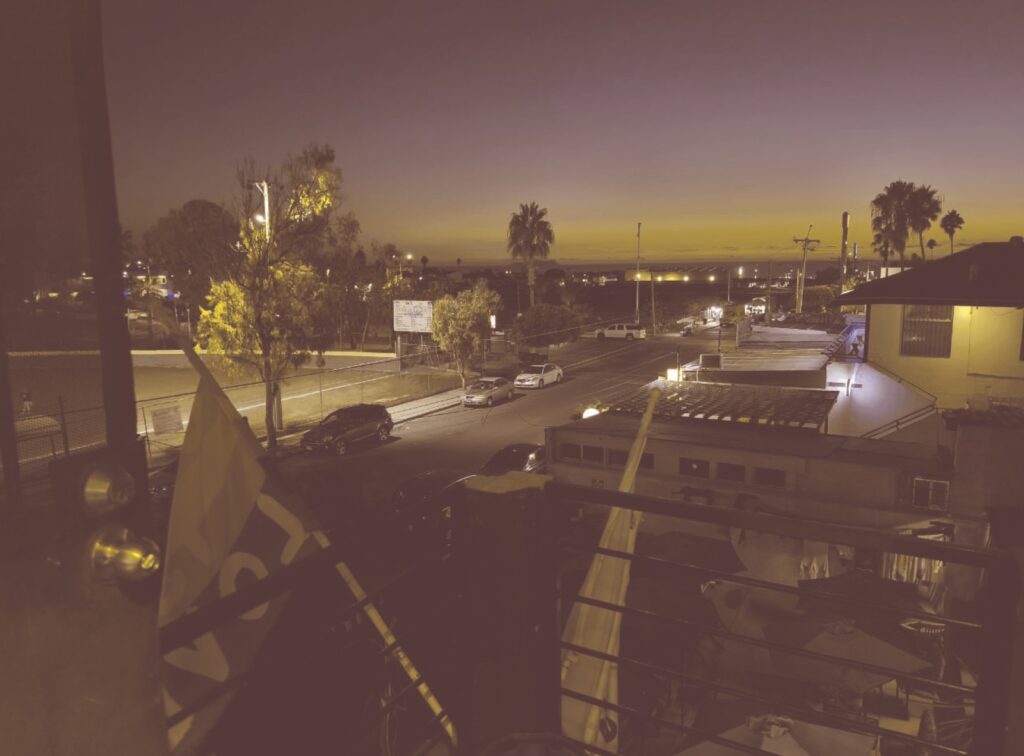
The mural strikes me immediately: A whirlwind of colors and shapes covering the entire west facade of the two-story building, facing a small inner courtyard with tables, chairs, a sofa area, and a small outdoor kitchenette. The breeze is fresh, the evening gentle, the voices of kids playing football across the street merge with the calm chitchat of residents sitting at the tables in the patio, chilling. After dusk, some movement up and down the outdoor staircase, in and out of the kitchen, signals cooking time. The air starts smelling of rice and chili peppers, with notes of hot chocolate and tortillas.
Casa de Luz is a migrant shelter in Tijuana. It was founded in 2019 by a group of LGBTQI+ folks from different geographies who were migrating together in caravans across the Central-American route between 2017 and 2018. By the time they arrived in Tijuana, the implementation of the Migration Protection Protocols and the 2019 “Remain in Mexico” policy forced them to stay in Mexico while their asylum claims in the US were processed. Stranded in the city, this familia caravanera (caravan community) were on the lookout for any form of refuge across Tijuana – from the 2021 large migrant camp in El Chaparral4 to an abandoned gym – until one year after the outbreak of the COVID-19 pandemic when Jack Nooren, a San Diego-based long-term friend and supporter, purchased the two-story building in Playas that is now Casa de Luz.
“We never thought of becoming a shelter, let alone a model or benchmark for other shelters. Casa de Luz was born out of the need to have a home – we just wanted to stay warm, cook, and distance ourselves from all the discrimination and Machiavellianism that migrants are treated with,” Irving Mondragón, Director of Casa de Luz, tells me.
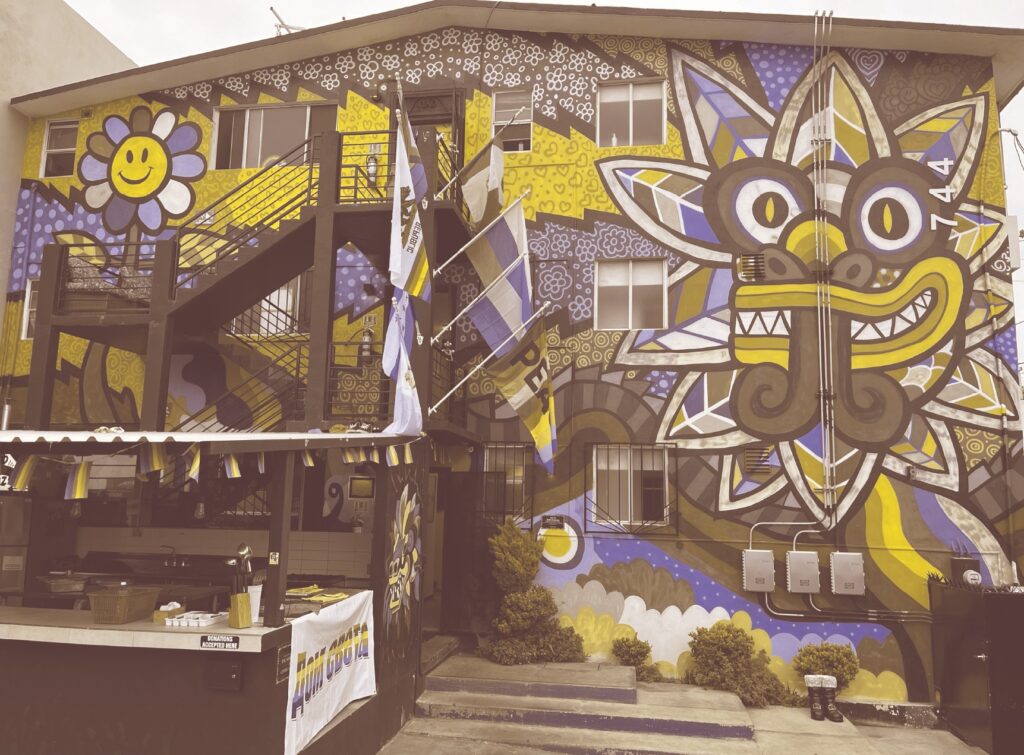
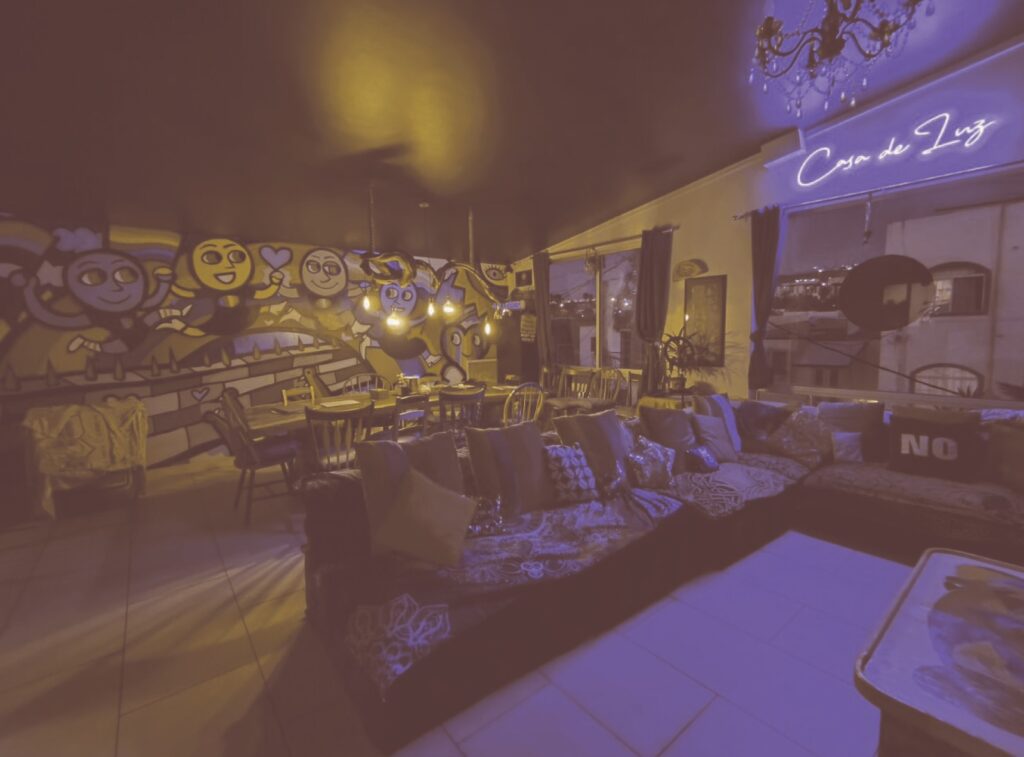
Yet, this shelter is special. Not only are there colors everywhere, but it also really feels different: a notable opposition to what Irving calls “hospital aesthetics” typical of the dull, gray, clinical look sported by many shelters (casas migrantes) and soup kitchens (comedores) across the migration route in the Americas. El desasosiego – the permanent state of anxiety that people on the move have often etched on their skin – is lifted by the welcoming feeling offered by Casa de Luz.
Situated in the heart of Playas, the architecture of this modest building absorbs, redistributes, and temporarily eases the stress carried by bodies on the move. Instead, there’s warmth: in the way the clinging of kitchenware reverberates against the façade and off the windows, adding another homely layer to the sonic landscape of the moment; in the way the pale yellow light of soft lightbulbs irradiates onto the courtyard at night; and in the way people come in and out freely and care for this space that feels exactly like, as Irving calls it, “a collective house.”
Casas migrantes are a vital part of Mexico’s growing and complex humanitarian architecture,5 one that migration scholar Alejandro Olayo-Méndez describes as “humanitarianism from below,” a notion highlighting the bottom-up, locally-rooted and often faith-based nature of migrant shelters across the country. This kind of humanitarian work, Olayo-Méndez argues, has emerged in Mexico because of “the political complexities that avoid recognizing migration patterns there as a humanitarian crisis, preventing international humanitarian agencies’ full intervention.”6
In such a context, the flexibility and adaptability of shelters have become crucial. Since the first shelter in Mexico began operations in 1987 in Tijuana, with minimal infrastructure and financial support,7 these places have had to consistently reshape their spaces, services, and organization, adapting to changes in migration patterns across the Americas. From Tapachula, on the border with Guatemala, all the way up to Ciudad Juárez, Mexican casas migrantes have gone from offering food, shelter, and first aid, to providing medical care, legal services, cash transfers, and even basic education and human rights training, responding to the emergent needs of people on the move. Yet, they often do so with limited capacities, raising questions around the standards and quality of aid, as well as notions of sustainability, with some changes even reinforcing inclusion and/or exclusion dynamics, heightening the unequal relationships of power that are present in the shelters, or even reinforcing bordering practices of control.8
“During our travels with the caravans, arriving at a shelter was always a surprise,” Irving explains. “It could be good; it could be bad. Often, these were not places that protected people. Some were very rigid, others directly hostile, others religious, where we, the LGBTQI+ community, did not fit. Time and again, intimacy and privacy did not seem to be among the priorities of these spaces.”
While of course this is not the case for all shelters, Irving’s words make it clear that it is important to interrogate the reasons why shelters are created, and whether the protection and safety they offer are on the terms of residents, or not.
It has been widely researched how architectures of emergency, support, and care often become dehumanizing, functioning in prison-like ways, and Mexico is no exception: “Every act of care, deep down, is also an act of control,” I overheard when visiting some of the shelters in Tijuana. The use of surveillance cameras; sterile and cold building materials; strict movement rules; patronizing, punitive or submissive practices for space organization and the reproduction of colonial and racial power dynamics are some of the contradictions shelters all across Mexico embody.9
“Migrant shelters […] function as sites of disciplinary and social control despite – or maybe because of – their sincere intentions of helping migrants and asylum seekers.” writes migration scholar Lupe Alberto Flores. “After all, migrant shelters in Mexico tend to be extremely careful of who enters and exits since individuals involved in organized-criminalized groups usually hang out nearby.”10
The intertwining of organized crime with migration is a particularly sensitive issue throughout Mexico, where the deployment of policing practices in shelters has contributed to the stigmatization of migrants as criminals – thus, seriously affecting their experiences and defining their identities.11
Welfare and containment, care and control: one is often only one thin, delicate line away from the other, and navigating that contradiction – spatially, physically, socially – is crucial. But then, I wonder, what does it mean to build spaces of care? What do buildings that provide relief actually look like?
“I think it’s food!”, Irving says, smiling. “Food is what keeps people together, brings them close to their roots, contributes to their health and well-being.”
Being able to cook, feed, and to be fed is one of the most important things in life – but even more so, Irving explained, when there is little to no access to healthcare: “the best and most basic way to stay healthy is by taking care of what one eats.”
Feeding as care
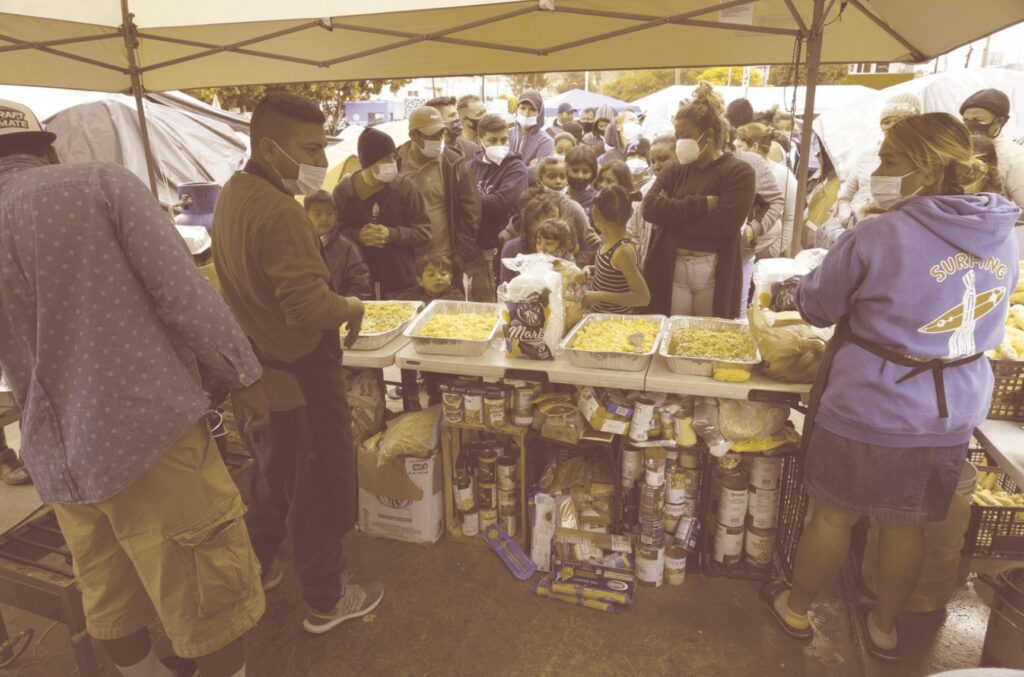
“During the last caravan, the 2019 one, which was one of the most complicated one, we [the LGBTQI+ community] launched a campaign on GoFundMe. With the help of friends, allies, academics and activists we purchased a mobile kitchen, and we started cooking for the caravan. The priority were [sic] always the most vulnerable: single mothers with children and unaccompanied minors; but soon we were feeding more and more people.” Irving explains. “We began hearing ‘hey, did you see? The culeros are feeding us!’ [In El Salvador and Honduras, culero is used to refer to gay men; in Mexico it is a vulgar word used as an insult] and we realized they were acknowledging us.”
Everyone would lend a hand, literally: “They would come next to us, show their hands and say ‘¿en qué te apoyo?’ (how can I support you?). That is a form of love. It’s not just about offering help, but about being seen, validated.”
The mobile kitchen became a central space of reunion, activation, exchange, and care. It was the place where people felt useful. Crucially, it was not a fixed space – it was built, dismantled, carried, and built again, responding to the specificities of the road, of the hands that were lent, and of the needs of the caravan. It was also the place for announcements and the exchange of ideas with locals along the route – those who offered food and help to those on the move.
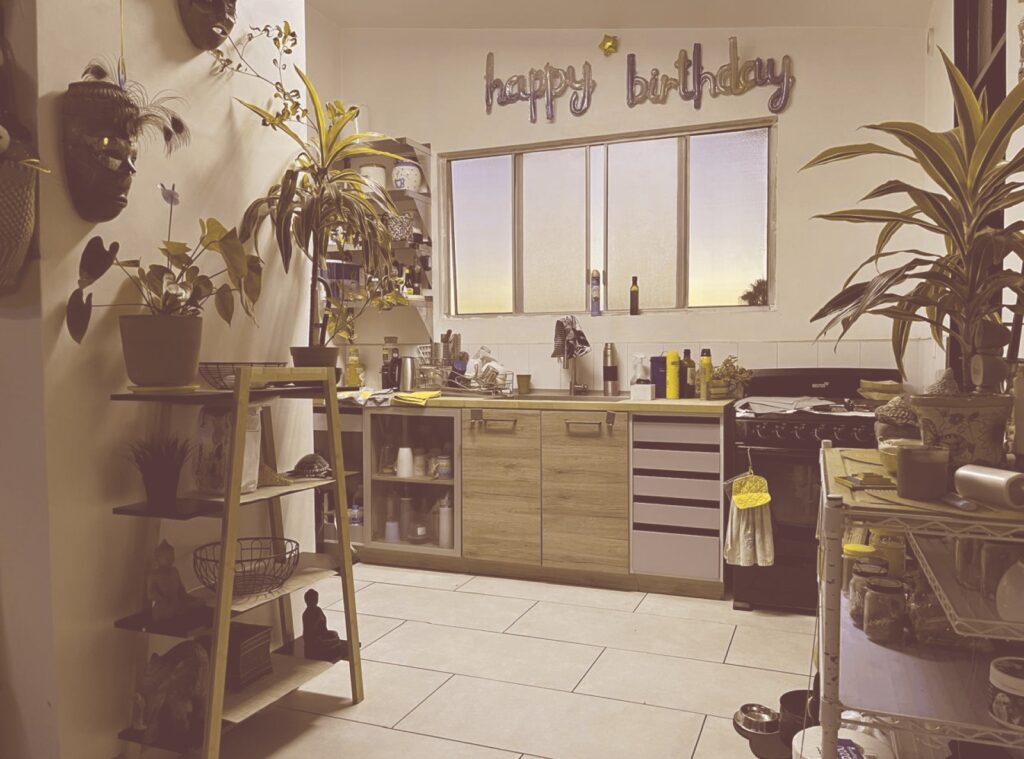
“The experience of the mobile kitchen and the power of food have been fundamental in deciding the layout of our kitchen here at Casa de Luz,” Irving explains. “It is in the center of the house, facing the common area. It is colorful and spacious, with plenty of cupboards and storage space. It is well-equipped and always clean. And most importantly: it is open to everyone.”
That’s not a given – in some shelters, cooking areas are inaccessible to residents. In Casa de Luz, instead, the kitchen feels sacred and collectively cared for in a way that reminds me of the kitchen in my grandmother’s home: the place where all life happened.
I follow Irving through a series of short corridors, passing colored doors on every floor: the residents’ rooms. He shows me an empty one, “They all have windows to the street and double beds”, he explains. Casa de Luz can host up to one hundred residents, but it isn’t at capacity now – occupation varies depending on the sociopolitical context: “The shelter is like a window into time: we can tell where there will be political unrest because we start welcoming people from that geography before the actual conflict breaks out. It happened with Taiwan, China, Russia, Ukraine, and now, most recently, with Venezuela.”
Walking down the stairs, the sounds of the neighborhood surround us. The location of Casa de Luz is special, too; embedded in a lively neighborhood that at first confronted their presence, the shelter has since changed the local community’s perception to one that is now actively supportive.
Back on the patio, sipping hot chocolate, I ask Irving what it means to dignify a space: “It’s about creating a place where one feels safe, good, in harmony.”
He goes on to talk about the importance of being together: “It’s the proximity of the bodies, seeing the same faces every day, hearing the same inside jokes. You begin to feel safe among all of them: you sleep with them, you warm up with and through them, you’re part of them.”
Throughout the Central-American route, from the camp in El Chaparral to the abandoned gym transformed by the community before moving here to Casa de Luz, the caravan has been part of a larger body: in all of these places, acuerparse – this beautiful Spanish word that literally translates to putting bodies together (to support each other) – took added a new layer of meaning. It became about making places; introducing mobile cooking facilities, constructing DIY architecture, installing temporary infrastructure, and establishing human relationships. An ever-evolving form of appropriating space that is, in fact, quintessentially Tijuanense, and speaks to a larger phenomenon in Latin America, from squatters to street vendors.
The more I hear Irving speak, and look at Casa de Luz on this fresh January evening, the clearer it becomes that the architectures negotiating relief within the current bordering regime are those that offer a window outside the narrative of surveillance, control, victimization, and violence. Often, these are not the gray, 200-square-meter rooms packed full of bunk beds, but they are alternative, community-driven spaces instead: restaurants, squares, camps, parks. An improvised street lunch, the store-front of the bakery selling the best conchas in town, a piñata party on the waterfront. Places that, beyond pity or saviorism, are about creating a collective sense of care.
Support Casa de Luz here: https://www.casadeluz.com/supportus
Sources
[1] Gloria Anzaldúa, Borderlands / La frontera: La nueva mestiza (1987)
[2] Ibid
[3] Ibid
[4] Between 2019-2021, caravans of people on the move coming from South and Central America arrived in Tijuana with the hope of seeking asylum and protection in the U.S. Instead, they crashed head-on with restrictive immigration policies on both sides of the border, such as the U.S. program “Remain in Mexico”. Stranded, unable to cross, and with nowhere to go, migrants, asylum seekers and people of all walks of life got together and camped next to El Chaparral, a southbound vehicle crossing part of San Ysidro Port of Entry, taking over the very same border infrastructure that was violating their rights. The camp was dismantled at the start of February 2022.
[5] Olayo-Méndez, Alejandro. Humanitarianism from Below: Faith, Welfare, and the Role of Casas de Migrantes in Mexico. NYU Press, 2025. P. 86
[6] Ibid. p. 87
[7] Ibid. p. 81
[8] Ibid. p. 83
[9] Herrera Rosales, Erika. “The Implications of Migration Governance and Colonial Structures in Humanitarian Organisations in Mexico”, in International Journal for Crime, Justice and Social Democracy, Vol.12, p. 73.
[10] Flores, Lupe Alberto. Surveillant Materilaities of Migrant (Im)mobility: Reconceptualizing Border Technologies, available online on Platypus, the CASTAC blog: https://blog.castac.org/2020/07/surveillant-materialities-of-migrant-immobility-reconceptualizing-border-technologies/
[11] Ibid. Footnote 7. p.72
VOLUME69: Stress Management examines how pressures converge and how architecture and design both absorb and exert them.
Related article